
Prosecution Hits Back in Navarro Pre-Sentencing Report
Image:
Description:
Photo: Coglianese Photos
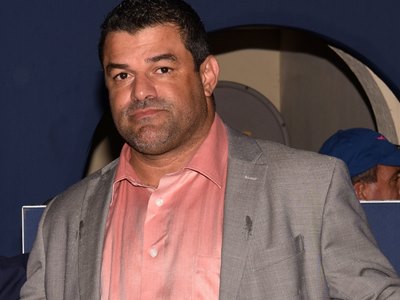
Jorge Navarro
One week after defense counsel for Jorge Navarro filed a pre-sentencing report that painted the trainer as a remorseful and caring horseman who lost his way due to "the pressure associated with professional horse racing" and an "insatiable desire to win (that) tainted his judgment and led to his downfall," federal prosecutors hit back with a very different portrait of the suspended trainer.
In their pre-sentencing filing Dec. 10 with the United States District Court in the Southern District of New York in the case of Navarro—who pled guilty Aug. 11 on charges involving the use of performance-enhancing drugs in racehorses—United States Attorney Damian Williams and Assistant U.S. Attorneys Andrew C. Adams and Sarah Mortazavi described Navarro as "the keystone for (a) structure of abuse, corruption, and duplicity ... a trainer who treated his animals as expendable commodities in the service of his 'sport.'"
Navarro is set to be sentenced Dec. 17. He is part of a federal indictment of more than two dozen individuals in Thoroughbred and Standardbred racing for allegedly participating in a "widespread, corrupt scheme by racehorse trainers, veterinarians, (performance-enhancing drug) distributors, and others to manufacture, distribute, and receive adulterated and misbranded PEDs and to secretly administer those PEDs to racehorses under scheme participants' control."
CROSBY: Navarro Attorneys File Pre-Sentence, Deportation Looms
Prosecutors also accused Navarro of "blatantly breaching the terms of his plea agreement" in his Dec. 3 request, when his attorney asked that the court impose a sentence below the advisory guideline range and recommend that the Bureau of Prisons designate Navarro to a facility as close to South Florida as possible to facilitate family visitation.
"Despite further agreeing that 'Neither party will seek any departure or adjustment pursuant to the Guidelines that is not set forth herein,' Navarro asks the Court to depart and adjust the stipulated Guidelines sentence on the basis of out-of-circuit precedent never adopted in this Circuit, and contrary to the Guidelines calculations in the plea agreement," prosecutors wrote. "Navarro's decision to breach the terms of his plea agreement provides the government with the choice between two options: insisting on specific performance (i.e., holding Navarro to his original agreement that the stipulated guidelines calculation was and remains the applicable calculation) or rescission of the agreement and proceeding to trial...
"The government opts to hold Navarro and his counsel to their word, which also happens to reflect the actual facts of the case, the terms of the guidelines, and prevailing Second Circuit law."
The prosecution also requested "that the Court impose the additional special condition of supervised release, namely, that the defendant be prohibited from engaging in the occupation, business, or profession of training racehorses, including by requiring that the defendant relinquish any state-issued license required for engaging in that profession for the term of his supervised release, which cannot exceed three years."
During the Aug. 11 hearing at which he pled guilty, Navarro also admitted a "loss to victims" resulting from his actions of more than $25 million in purse money and agreed to make restitution. In their Dec. 10 filing, prosecutors requested "only that the Court's oral pronouncement of sentence include the amount of the forfeiture money judgment previously agreed." The plea agreement also includes a separate $70,000 fine payable to the government due at the time of sentencing, which is not included in the restitution amount.
KIECKHEFER: Navarro Pleads Guilty in Horse Doping Scheme
In requesting the guidelines sentence of five years for Navarro, prosecutors asked Judge Mary Kay Vyskocil not only to "provide just punishment," but to send a strong signal to the rest of the Thoroughbred racing industry.
"A guidelines sentence of 60 months will send a strong signal to racehorse trainers and others in the industry that there will be serious consequences if they abuse their position of trust by engaging in the callous and dangerous practice of doping racehorses for profit," the filing read. "A significant sentence will counter the pervasive view in the racehorse industry that selling and administering adulterated and misbranded drugs is inconsequential and that the consequences of criminal activity will never amount to significant criminal penalties."
While three exhibits in the filing were submitted under seal and a section was redacted, the visible remainder conveyed a crystal clear picture of the government's view of the case.
"Structures designed for the protection of the horses abused in this case failed repeatedly," prosecutors noted. "Fixtures of the industry—owners, veterinarians, and trainers—flouted rules and disregarded their animals' health while hypocritically incanting a love for the horses under their control and ostensible protection."
Prosecutors again stated Navarro's duplicity in administering drugs that "ranged from pain relievers, red acid, 'bleeder' pills, ventipulmin, SGF-1000, and various blood builders," including a substance Navarro referred to as "Monkey."
 An image of a bottle of 'Red Acid' included in the prosecution's Dec. 10 filing
"Navarro's means of evading detection of this unlawful scheme included: the use of drugs that Navarro believed would be untestable by racing officials; the coordination of the administration of those drugs with other trainers and veterinarians to avoid physical detection by racetrack employees and racing authorities; and the preparation, in coordination with certain corrupt veterinarians, of false veterinary bills designed to deceive racing officials and/or racetrack employees who might demand proof of a valid course of veterinary care," the filing alleged.
The prosecution cited an interaction where "Navarro casually related that a particular pain medicine offered for sale to Navarro was so powerful, 'The guy (offering Navarro the drug) says he has killed about four horses already … He is saying the horses can't take it, and die.'"
The report also cited "Navarro's flippancy towards his dangerous and illegal conduct" which was "exemplified by calls, text messages ... and other evidence demonstrating that the defendant considered his prolific doping a badge of honor.
"Navarro, notorious as the 'Juice Man' due to his routine 'doping,' kept a pair of customized shoes in his barn with the words "#JUICE MAN" emblazoned across the front."
 A photo of customized shoes allegedly owned by Jorge Navarro included in the prosecution's Dec. 10 filing
The prosecution called into question several of 70 letters of support in a 100-page document filed Dec. 3 by the defense from individuals ranging from many members of Navarro's family to those who worked with the trainer in a professional capacity.
"Troublingly, several of the letters of support submitted by the defendant are authored by individuals who participated in, or were otherwise aware of, Navarro's doping practices," they wrote. "As such, their statements to the Court regarding Navarro's alleged consideration for racehorses ring false."