
Oklahoma Approves 'Category 1' Rule on Interference DQs
Image:
Description:
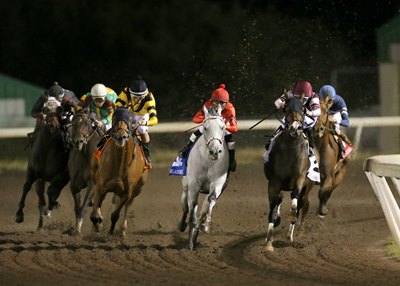
Photo: Dustin Orona Photography/Remington Park
Racing at Remington Park
In a move that could become a trend, the Oklahoma Horse Racing Commission Feb. 17 became the first North American jurisdiction to adopt the Category 1 interference standard used in much of the world.
Under the Category 1 rules, when it's been determined that interference has occurred, stewards declare a disqualification if they conclude that the horse who suffered the foul would have finished ahead of the horse that caused the interference, if not for the foul.
Currently most North American jurisdictions operate under the Category 2 standard, where after the stewards determine a foul has occurred, they then determine whether that foul cost the horse who suffered the infraction a better placing. If so, the horse that interfered is disqualified and placed behind the horse, or horses, that were fouled.
In practice, the Category 1 rules effectively reduce the number of disqualifications. It eliminates DQs of horses who win easily but perhaps interfere with a horse who finishes third—just out of second. In that situation under the Category 2 standard, if stewards determine that the third-place horse would have finished second if not for the interference, they will put the easy winner behind the third-place horse, who lost a placing because of the interference.
The Thoroughbred Idea Foundation, which advocates on behalf of racing bettors and owners, has pushed for a move to the Category 1 standard in United States racing jurisdictions. It reported the change in Oklahoma.
"This is a tremendous first step for North American racing jurisdictions to begin the process of harmonizing rules governing interference and improving the overall experience for racing's primary customers—the bettors," said TIF executive director Patrick Cummings. "What we have in North America is a patchwork quilt of various rules which often place total equity above consistency and logic in determining which infractions warrant a demotion. It is always toughest to be the first, so I commend the OHRC for taking that step and I anticipate several others will follow in the near future."
Through its International Harmonization of Racing Rules Committee, the International Federation of Horseracing Authorities also has been advocating for the move to Category 1.
GENARO: Interference Rules Dominate Harmonization Meeting
The TIF forwarded to BloodHorse the wording of the rule change in Oklahoma.
"If the stewards determine a horse or its rider has caused an interference and finished in front of the horse it interfered with, and if not for the interference the horse would have finished behind the horse it interfered with, the interfering horse shall be placed immediately behind the horse with which it interfered. If the interference is a result of dangerous riding, the stewards shall place the interfering horse in last place."
As the rule results in fewer disqualifications, Oklahoma—like many jurisdictions that adopt Category 1 standards—included the provision on dangerous riding. Should interference be the result of dangerous riding, the OHRC's rule empowers stewards to demote the interfering horse to last, regardless of where the sufferer of the interference finished. This addition to the rule, within the scope of the international Category 1 philosophy, was adopted to discourage jockeys from employing a "win-at-any-cost" approach.
"Dangerous riding" means a rider causes a serious infraction by: (A) purposely interfering with another horse or rider; or (B) riding in a way which is far below that of a competent and careful rider and where it would be obvious to a competent and careful rider that riding in that way would likely endanger the safety of another horse or rider."
The rule amendment to the Category 1 standard was proposed in November 2021. After a public comment period, it was passed unanimously by the commission's rules committee. Oklahoma's tracks include Fair Meadows, Remington Park, and Will Rogers Downs.
The rules are expected to be put in place in September.
The Racing Officials Accreditation Program also noted that Oklahoma would be the first U.S. jurisdiction to advance a Category 1 style interference rule governing the running of the race and stewards' inquiries. It noted that the categories of interference DQ rules are part of a larger international discussion, with the United States and Canada currently being the outliers.