
HISA Begins Holding Hearings of Appealed Rulings
Image:
Description:
Photo: Jockey Club Photo
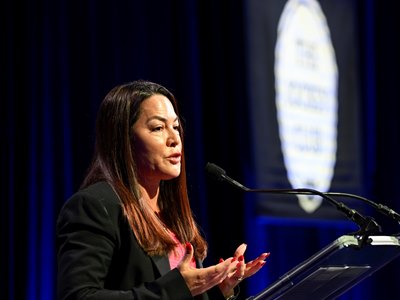
HISA CEO Lisa Lazarus
The Horseracing Integrity and Safety Authority began holding hearings this week of appealed rulings following the implementation of HISA's Racetrack Safety Program that begin in early July, HISA CEO Lisa Lazarus said Oct. 28.
Lazarus indicated the first set of appeals began Oct. 24. Most HISA-related rulings and appeals have involved riding crop violations.
HISA's Anti-Doping and Medication Control Program is not yet underway, scheduled to take effect in January 2023. That program will likely expand HISA-related rulings.
Approximately six or seven hearings were "held by enforcement team and a panel of the board of directors," Lazarus said. "The decisions haven't been issued yet but the first set of hearings did go forward on Monday."
Some appeals of riding crop violations involve loss of purse to an owner, a controversial rule that comes into play when a jockey strikes his mount 10 or more times. Riders are permitted to only give their mounts six or fewer strikes, with sanctions issued only to jockeys when they go one to three strikes over the six-strike limit.
One of the reasons owners are involved via purse loss is to bring "leverage and influence" to change conduct, Lazarus said. She noted that about 8.5% of riding crop infractions have involved loss of purse.
"That number is declining in terms of the percentage," she said. "We aren't seeing more of them, but obviously, the sanction is a deterrent."
HISA plans for infractions and appeal information to appear online, with the organization planning to revamp its current website, which Lazarus acknowledges is not easily navigated.
"We're going to have a ruling system, where you can look up, in the case of a crop violation—the jockey, the violation, and the consequences of the decision. All of that will be public," she said.
Iowa seven-term U.S. Senator Chuck Grassley called out HISA for its limited transparency in a meeting with Lazarus and Iowa stakeholders Oct. 27.
"Transparency in government is very, very important," Grassley said, according to a release from the Iowa Horsemen's Benevolent and Protective Association. "You can't expect constituents, taxpayers, residents, and citizens of this country to go along with what the government is doing until the government makes it very clear to them what they're doing."
HISA, established when the Horseracing Integrity and Safety Act was signed into federal law in 2020, is responsible for drafting and enforcing uniform safety and integrity rules in U.S. Thoroughbred racing. It is overseen by the Federal Trade Commission.
Earlier this month HISA officials referred an open records request from BloodHorse related to its ruling after an investigation into the Oct. 1 Lukas Classic (G2) at Churchill Downs to the Kentucky Horse Racing Commission. The KHRC, which initially led the investigation, responded to BloodHorse's open record request.
HISA claimed as a private organization, albeit one with federal ties, it was not required to release information related to Freedom of Information Act requests. Courts have at times ruled that private organizations that operate as the functional equivalent of government entities are subject to FOIA requests.
Lazarus agrees with the need for accountability and transparency, which she believes HISA can advance with time, website improvements, and direction.
"We will come up with procedures and guidelines on what we will make available to the public, and available on request, even though we're not (formally participating in) open records," she said. "We will have a policy that essentially operates in place of that. That just hasn't been finalized."