
New York to Study VLT Impact on Racing, Breeding
Image:
Description:
Photo: Coglianese Photos
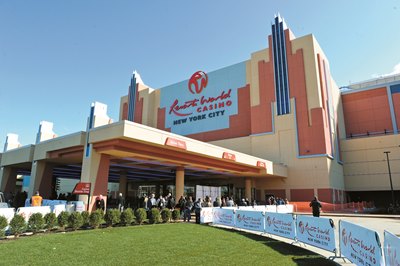
Resorts World Casino at Aqueduct
The New York State Gaming Commission is proposing to launch the first major review by the state of its nearly 20-year-old video lottery terminal betting program to determine the financial and economic impact on the horse racing and breeding industries.
The plan is among tens of thousands of line item appropriations presented to state lawmakers this week by Gov. Kathy Hochul in her $227 billion 2023-2024 state budget proposal.
The section of the budget under the gaming commission agency's fiscal appropriations portion of the spending plan states briefly that the Hochul administration is seeking to spend $1 million for an "independent racing study."
The Hochul budget documents do not elaborate beyond that one mention, but officials said the agency is seeking to have an academic institution conduct an assessment on an industry that has brought billions of dollars to the state since opening in the years after VLT wagering was approved as what was then a frantic revenue-raising effort shortly after the 2001 terrorist attacks.
Today there are nearly 17,000 VLT devices, which look and play like slot machines and are run ostensibly out of a central state Lottery Division facility—at 10 locations, including Aqueduct Racetrack and Finger Lakes Racetrack, as well six harness tracks.
Over the years, there have been industry-funded reviews or studies by gaming consulting firms regarding projections about the financial impact of the VLT program on tracks and breeding funds, with numerous claims by industry executives that the VLT revenues served as a salvation for most racetracks, the racehorse breeding sector, and state coffers. Not fully realized was what officials predicted a generation ago: that the VLT parlors would give a major economic development boost to struggling upstate areas of the state.
Officials likened the proposed study, which will happen sometime in the coming year if the Legislature, as expected, approves the one-time spending idea, to reviews governments conduct regarding whether economic development incentives provided by a state actually create the numbers and kinds of jobs and other activities as envisioned by the public expenditures.
Gaming Commission officials say the use of an academic institution instead of outside private party paid consultants will see a neutral party study the impact of VLTs on the racing and breeding sectors. The agency won't select a university or college or some such academic institution to conduct the study until after lawmakers approve the proposal. The overall state budget is due March 31.
The Hochul budget, as The BloodHorse reported earlier this week, features a big racing industry-related ask of the Legislature in 2023: authority for the state to borrow $455 million on behalf of the New York Racing Association to finance a total reconstruction of Belmont Park, which, when completed would then lead to the closure of Aqueduct, ending NYRA's lease on that property—owned, as is Belmont, by the state—and leading to some sort of undefined, future use. (NYRA would, under the Hochul plan, fully fund the state's rare loan program for a private entity.)
The Hochul budget also rejects plans by operators of the state's year-old mobile sports betting program to lower the state's 51% tax rate on gross gaming revenues. Operators this week said the program's growth is unsustainable at record-setting levels seen in the past year; but the Hochul budget's revenue outlook's documents state that mobile sports betting tax revenues "are projected to increase slightly due to expected growth as the market matures." The state collected more than $900 million in revenues from mobile sports betting operators in the first year of the program, which began in early January 2022. The budget notes that relatively minor interactive fantasy sports industry tax revenues going to the state will decline slightly in the state's current fiscal year, which ends March 31, "due to the negative impact from mobile sports wagering."
The budget also calls for continuation of $100,000 in state funds for the Racing Fan Advisory Council, which is part of the gaming commission's budget. The fiscal plan also continues, unchanged, existing pari-mutuel tax rates and simulcasting provisions for another year.