
Opposing HISA, Fonner Park Cancels Interstate Wagering
Image:
Description:
Photo: Fonner Park
Racing at Fonner Park
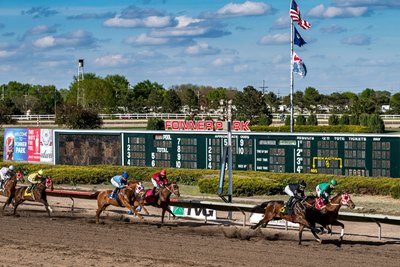
Citing complications and uncertainties with oversight under the Horseracing Integrity and Safety Authority, Fonner Park announced Feb. 10 it would cancel offering its simulcast signal and wagering to other states. Fonner Park's meet began Friday and continues through May 6.
The Nebraska racetrack becomes the third Thoroughbred track not to offer simulcasting to other states under HISA after Lone Star Park initially did so last summer with HISA's introduction, and Sam Houston Race Park followed suit this winter, both upon the direction of the Texas Racing Commission.
Betting at the two Texas tracks plunged, with Sam Houston down approximately 90% in handle. Simulcast wagering is responsible for the bulk of wagering at U.S. racetracks.
According to HISA CEO Lisa Lazarus,if a racetrack does not export its signal, they do not fall under HISA's authority.
HISA, authorized in 2020 federal legislation, began its initial responsibilities for drafting and enforcing uniform safety and integrity rules in U.S. Thoroughbred racing in July. But full implementation of HISA, including its Anti-Doping and Medication Control Program, has been delayed, in part by legal setbacks.
Late last month, the Fifth Circuit Court of Appeals denied a request by the HISA and the Federal Trade Commission to put the brakes on the appellate court's ruling that HISA is facially unconstitutional. Since that time, an amended complaint filed in a Louisiana federal court names a host of new states and other entities, including Fonner Park, that collectively request a national injunction against oversight of important areas of horse racing by HISA.
"That lawsuit has not advanced with sufficient clarity to ensure that HISA rules would not be applicable to us," Fonner Park CEO Chris Kotulak said in a release
The state of Nebraska is also involved in the litigation, as are the Nebraska Racing and Gaming Commission and the Nebraska Horsemen's Benevolent and Protective Association.
"The unreachable and overreaching HISA rules and regulations have presented demands and obstacles that a racetrack our size cannot achieve or endure," Kotulak added.
Fonner Park further noted that increased costs and the conflict between state and federal rules of racing presented "insurmountable" challenges that led to its decision.
Lazarus disputes that HISA creates conflict with state rules, telling BloodHorse earlier this winter that she views federal law as pre-empting state law.
HISA issued a statement Friday afternoon, saying that state racing commissions that enter into voluntary agreements with HISA and Horseracing Integrity & Welfare Unit "see significant cost savings and efficiencies that accrue to the benefit of all participants, including tracks. However, when states do not enter an agreement, as is the case in Nebraska, the full compliance and implementation costs fall to the tracks.
"We have engaged in conversation with the management team at Fonner Park and offered to work with them to find constructive solutions to bring the track into compliance with HISA's enhanced safety protocols. As with all other state commissions and tracks, HISA is eager to find workable solutions while ensuring compliance with the law."
Current legal rulings prohibit the imposition of HISA rules only in Louisiana and West Virginia.
"Challenging federal regulations is a gamble my board has currently chosen not to make, as this would leave Fonner Park splayed open and at the mercy of a lengthy judicial process and costly legal circumstances that would significantly damage Fonner Park and our horsemen," Kotulak said.
"It's a shame it's come to this," he concluded.