Baffert Motion Asks Judge to Recuse from CDI Case
Image:
Description:

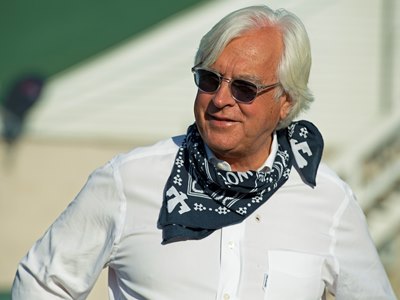
Photo: Anne M. Eberhardt
Trainer Bob Baffert
In a motion filed Feb.10 by attorneys for Bob Baffert, a federal judge presiding over litigation filed by the trainer against Churchill Downs Inc. and others is asked to recuse herself from the case.
The request comes almost a year after the judge was assigned to the case and a week after a significant hearing was conducted.
The motion accuses U.S. District Judge Rebecca Jennings Grady of a conflict of interest based on her husband's affiliation with a company that acts as a legislative agent for The Jockey Club, the organization that serves as the breed industry for North American Thoroughbreds.
"The motion is brought on a good faith basis after a diligent investigation of the public record and not for other advantage or litigation tactic," wrote Baffert attorney Clark Brewster.
A spokesperson for The Jockey Club said Jennings' representation is limited to a specific legislative effort, that is unrelated to the Baffert/CDI case.
"Patrick Jennings and his colleagues at Commonwealth Alliances, a government relations firm in Frankfort, Ky., have represented The Jockey Club since the spring of 2022," the TJC spokesperson said. "Commonwealth's representation of The Jockey Club is limited solely to legislation introduced during the 2022 legislative session and is in no way related to any matter currently pending before a court."
The filing comes on the heels of a dust-up after Brewster apparently on Feb. 6 accused Churchill Downs and Jennings of an improper ex parte communication during a hearing last week on Baffert's motion for preliminary injunction against Churchill Downs when he tried to set aside the company's ban of Baffert racing at its tracks. An ex parte communication occurs when a party or the party's attorney communicates to a judge without the other party's participation.
After Churchill Downs and Jennings denied the claim and Brewster and Baffert did not take the matter further, Jennings issued a warning to Brewster.
"Plaintiffs' unsubstantiated claim that the Court engaged in improper ex parte communications is serious," she wrote in a Feb. 7 order. "Plaintiffs are warned that any future conduct implicitly threatening the Court, attempting to create or fabricate a situation suggesting recusal, or made for other advantage or litigation tactic will not be tolerated and may result in a show cause hearing and disciplinary action."
Churchill Downs is sure to respond to the recusal motion unless Jennings acts first on one of two options presented to her by the filing. She can deny the recusal motion and issue a ruling either granting or denying Baffert's motion for preliminary injunction, or she can recuse.
Generally, judges recuse from litigation if staying on the case would be ethically improper or create the appearance of impropriety.
According to the motion, "Judge Jennings has failed to disclose that she receives marital income from the lobbying efforts of her husband, Patrick Jennings, a lobbyist for The Jockey Club. Such facts...would clearly cause a reasonable person to believe the judge has a personal bias against the moving party (Baffert)."
The recusal motion says The Jockey Club filed a brief in opposition to Baffert after he was suspended by the New York Racing Association and challenged the suspension in federal court; that BloodHorse, which is partially owned by The Jockey Club, has been a "constant source of negative articles about Mr. Baffert to whip up public opinion against him;" and that CDI board chairman Alex Rankin is a steward of The Jockey Club. Rankin is also a defendant in the lawsuit.
Baffert first became aware of the connection between Patrick Jennings and The Jockey Club Feb. 8, according to the motion. It alleges, "In April of 2022, Mr. Jennings' firm picked up a new client: The Jockey Club. In 2022, The Jockey Club paid Mr. Jennings and his associates $50,750.00. For his lobbying efforts on behalf of The Jockey Club as a legislative agent, Mr. Jennings is reported to have earned $34,256.25 in fees in 2022."
By the rule adopted for this year's Derby, horses under the care of a trainer suspended by CDI must be transferred to a new barn unrelated to the trainer's operation by Feb. 28 to become eligible for Derby qualifying points. Only 18 days are left for either Baffert to obtain a favorable ruling from Jennings—or some other judge on his preliminary injunction request—before owners of intended Kentucky Derby (G1) prospects would need to transfer horses to another trainer.