
Maryland Plan Seeks to Take Full Advantage of Preakness
Image:
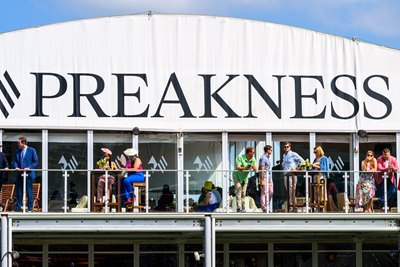
Description:
Photo: Anne M. Eberhardt
A plan for Maryland racing will lean into the Preakness Stakes and a new Pimlico Race Course
With a plan that leans into the Preakness Stakes (G1) and Pimlico Race Course while moving to an ownership approach that has proven successful in other racing jurisdictions throughout the country, it appears Maryland racing finally has a viable plan to move forward.
State lawmakers are advancing a $400 million plan to rebuild Pimlico while adding a training track within an hour's drive of the Baltimore track. The plan would see the Maryland Jockey Club move from the Stronach Group (1/ST Racing) to a state-owned, not-for-profit-managed arrangement.
Under the legislation, the Stronach Group would transfer the Pimlico property to the Maryland Thoroughbred Racetrack Operating Authority, with the nonprofit group taking over daily racing operations Jan. 1, 2025. The Stronach Group would continue to operate the Preakness Stakes through 2026, when the new nonprofit group would take over the state's signature race. The Stronach Group would then be able to develop the Laurel Park property as Maryland racing shifts to Pimlico.
Plans call for the Preakness to be conducted at Laurel in 2026 as the new Pimlico is built, with the classic returning to Baltimore in 2027.
After numerous proposed plans in recent years, this one seemingly has legs because it appears to have support in the Maryland House and Senate as well as from Gov. Wes Moore. And while we could bemoan the years it's taken to get here, the more optimistic approach is to think about the 2027 Triple Crown being conducted at three of the sport's most modern venues: the ever-evolving facility at Churchill Downs, a new Pimlico, and a rebuilt Belmont Park scheduled to welcome back the Belmont Stakes (G1) in June 2026 before full completion that September.
 The current plan for Maryland will keep the Preakness at Pimlico
After years of lagging behind other sports in terms of venues, the three hosts of the Triple Crown races will offer the modern amenities sports fans have come to expect. And while Churchill Downs Inc. already has benefited from the profits such a venue generates, the suites and modern seating at Pimlico and Belmont should deliver needed revenue for the Maryland Jockey Club and the New York Racing Association.
Thoroughbred Horsemen's Association chairman and CEO Alan Foreman sees the potential.
"With the model that we're setting up, we're getting a brand-new facility. How many years have you heard me say, 'We're not competitive in the sports and entertainment marketplace?' Why would anybody want to go to a dilapidated facility with lousy customer service and lousy food? It's just an environment that isn't conducive to bringing people out, particularly young people," Foreman said. "I've always said that one of the biggest handicaps of racing is that our venues are old; from a different era.
"Now we get a chance to re-imagine that in Maryland. I think that combined with what NYRA is doing, what Churchill's doing, come 2027—Pimlico and the training should be done by that time—you're going to have new venues at each of our Triple Crown facilities. And we think we're going to set a new standard for racing that hopefully will trickle down to other places."
While the specific plans for Pimlico have not been unveiled, it's safe to expect a smaller venue that will easily allow for quality temporary seating to be added for big events such as the Preakness and perhaps Breeders' Cup. For everyday racing, the smaller venue should provide quality seating options for those who turn out while increasing energy by putting people in a smaller area. It's the approach NYRA is taking at Belmont, where the new facility will be about a fifth of the size of the current building.
 Belmont Park plans call for a smaller venue and a similar approach is likely for Pimlico
Foreman believes the not-for-profit model makes sense in a state that does not have on-track gaming.
"It was to me highly unlikely that a private operator would want to come in because 'What's the upside for a private operator?' They're in the business of making a profit," Foreman said. "(The tracks) don't have gaming in Maryland—they get a small piece of gaming revenue for capital improvement purposes. And there's really no upside for an operator other than they covet the Preakness."
The performance of the Preakness Stakes will be critical for the new version of the Maryland Jockey Club to find a path forward and provide a cornerstone for the state's racing and breeding. With a new, modern facility in place to take full advantage, this tried and true model of building off a big event finally appears to be poised for the 21st Century in Maryland.